novagraaf_logo
EN
How Brandstock Legal helped Bacardi successfully register its EU trademark
Testimonials / Published, October 17, 2021

How Brandstock Legal helped Bacardi successfully register its EU trademark

overview

As leading professionals in intellectual property (IP) solutions, the task of protecting a 157-year-old iconic brand and its unique bottle falls directly within the scope of Brandstock Legal’s abilities. The team showcased precision and expertise to successfully overturn the initial decision by the EUIPO to refuse the registration of the Bacardi bottle as an EU trademark (EUTM).

Bacardi's branding, values and commitment to quality have remained remarkably consistent since its birth in Cuba in 1862. The brand and company have evolved, expanded and adapted, but the core elements of its iconic flagship product remain easily identifiable. It goes back to a culture of protecting its heritage and legacy – one started by Don Facundo, a man who had the vision to revolutionise the spirits industry.

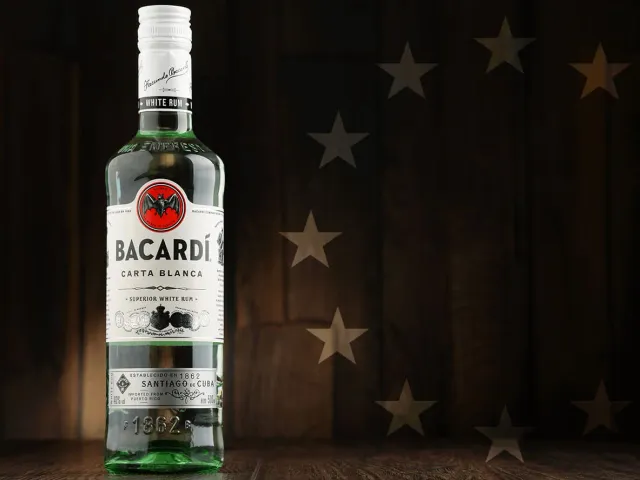
Since the early days of Bacardi rum, consumers know to look for the red bat seal, clean labelling and filigree-embellished coat of arms – features that together evoke the colonial Caribbean roots that define its character. Over the years, Bacardi has evolved its image to match the promise of its offerings: light, refreshing and accessible in a way that sets it apart from other rums. This has included clean lettering on crisp labels and the use of more delicate shades of glass to soften the harsh connotations historically associated with rum.

The Bacardi trademark and the EU trademark register

In 2017, Bacardi sought to register the combination of elements in its bottle as a figurative mark in the EU. Doing so would have expanded the protection of its image, preventing the rise of off-brand ‘look-a-likes’ and imitators, while providing the flexibility to update and adapt the specific bottle design as desired to support the brand's evolution. The elements involved included its characteristic, shape, red seal, white labelling and the black coat of arms that have appeared on nearly all Bacardi rum bottles since 1862.

Yet, the European Union Intellectual Property Office (EUIPO) examiner refused to register it due to an alleged lack of distinctiveness. The analysis of the trademark, based solely on its different elements individually, such as the colour and shape of the bottle, its wax seal or coat of arms, found that it did not depart from the general appearance of similar products already existing in the market, and so, it was not distinctive enough to identify a certain commercial origin. Bacardi's internal IP legal team disagreed, and so did we.

What resulted was a case where Brandstock Legal challenged the prevailing way of thinking about trademark and intellectual property protections.

How did Brandstock Legal assist Bacardi in securing an EU trademark?

The EU has notoriously strict guidelines for trademark applications. Bacardi initially fell foul of an overly narrow interpretation of the European Union Trade Mark Regulations (EUTMR) and worked with Brandstock Legal to overturn the rejection. Brandstock Legal has supported the Bacardi company for many years and was determined to effectively defend this recognisable, well-known element of its iconic branding.

The EUIPO examiner had rejected the application on the grounds of a lack of distinctiveness in two ways:

  • on account of the elements themselves, and
  • its common characteristics with other products in the market.

In both cases, the EUIPO examiner argued that the representation of the Bacardi bottle was insufficient to attain the level of distinctiveness of character required under EU IP law. The examiner noted that red seals, white labels and green glass are all commonplace decorative characteristics among spirits bottles. As such, the examiner felt that even when combined, the features were deemed not sufficient to distinguish a bottle of Bacardi rum from the others on the shelf. They would not depart from industry standards enough to warrant them as unique and therefore acquire trademark protections. Case closed.

The deeper issue of distinctiveness in the EU

Bacardi, the largest privately held spirits company in the world, has great brands and a fantastic portfolio of trademarks, and its IP legal department is actively engaged in protecting the company’s IP rights. Bacardi, therefore, asked Brandstock Legal to challenge the EUIPO's decision. It was clear that neither the lack of text nor the common nature of the elements was truly the problem, as the EUIPO implied. This was evident based on the fact that the Office had permitted the registration of other 3D signs and figurative representations of bottles, including Bacardi bottles, which lacked textual identification, and which had been found sufficient in other applications. As a result, Bacardi believed that the examiner had incorrectly assessed the distinctive character of all the elements of the mark considered as a whole, and disregarded the equal treatment and sound administration principles which guide the EUTMR.

The IP lawyers at both Bacardi and Brandstock Legal believed that a more nuanced understanding of distinction and brand identity was missing from the examiner’s decision. It could be true that the individual features were, in fact, non-distinctive on their own – but the same applies to most individual components of many brands. Therefore, although the examiner failed to recognise any distinctiveness in the application, they were confident and could effectively argue that this sign held all the quintessential elements of the Bacardi brand identity, which could be easily identified by consumers.

In short, like Bacardi, Brandstock Legal believed that these were elements which consumers could, and would, recognise on a shelf full of other liquor brands, after all, Bacardi spent 157 years ensuring that its Bacardi rum bottle was uniquely associated with the Bacardi company and rum product.

The solution: Brandstock Legal emphasised brand synergy

To overturn the ruling on appeal, Brandstock Legal supported Bacardi to encourage the Boards of Appeal to shift their stance and adopt a broader perspective on the trademark protection of packaging design.

The appeal against the EUIPO’s initial decision emphasised branding. In particular, it was noted that the nature of the liquor industry lends itself to subtle differences between products. The industry’s discerning customers are more likely to pay attention to smaller details which differentiate brands. Therefore, it was not necessary to create wildly unique product appearances. Likewise, it was not desirable in Bacardi's case to do so because it already had a branded identity that consumers recognised.

Likewise, although the individual elements of the sign themselves were not unique, the culmination of these elements created a recognisable brand. Brandstock Legal argued that the elements of the Bacardi bottle registration had a synergistic effect, which made the sign more than the sum of its parts.

As such, the Fourth Board of Appeals considered the refusal in the context of this argument. It accepted Brandstock Legal’s argument that the elements alone could not be taken into consideration without the wider context of the mark they form part of, and the brand they help to create. It acknowledged that the closer a trademark was to the actual product shape, the more likely it would be necessarily “devoid of any distinctiveness character” as defined under Article 7(1)(b), EUTMR. As such, it did not make sense to apply this requirement to each individual element.

A critical turning point came with the further recognition that Bacardi had sought to register specific graphical elements: the seal, coat of arms and label combined. Importantly, it had not sought registration for other elements, such as the aspects of the physical bottle itself.

This left the application of the sign much more flexible. Indeed, the creation of an entire line of products using this mark would create a distinct and unified brand identity readily recognisable to consumers, and prevent the rise of ‘look-a-likes’ and imitation brands seeking to co-opt Bacardi's unique identity. As such, the Boards of Appeal also found that the mark comprised only graphic elements as well as a colour scheme, and thus these could not be considered purely decorative.

Brandstock Legal had set out to prove that the elements of the sign Bacardi wished to register did indeed constitute a distinct trademark, and we did exactly that. The Board of Appeals reversed the EUIPO examiner’s findings. A degree of distinctiveness existed which could satisfy the application requirements.

The core of the argument presented to the Boards of Appeal redefined how the distinctive character of marks consisting of the shape of products and their decorative elements must be assessed in the EU, opening the door for a new understanding of marks with a graphic appearance.

Need help protecting your trademarks in the EU? Speak to your attorney or contact us for tailored support.