
 Close
Close- Trademarks & Designs

- Trademarks & Designs
- Strategy & managementUnlock the potential of your brand portfolio
- SearchingScreening and clearance search with smart pre-selection
- RegistrationTailored support to maximise your brand potential
- WatchingMonitor rights efficiently and cost-effectively worldwide
- Monitoring & prosecutionProtect and enforce rights on- and off-line
- Renewals & recordalsFlexible renewal and recordal services
- Strategy & management
- IP consultingBrand development, audits, licensing, M&A, valuation/monetisation, contract management and more
- IP consulting
- Patents
- Solutions
- Trademarks & Designs
- Trademarks & Designs
- Strategy & managementUnlock the potential of your brand portfolio
- SearchingScreening and clearance search with smart pre-selection
- RegistrationTailored support to maximise your brand potential
- WatchingMonitor rights efficiently and cost-effectively worldwide
- Monitoring & prosecutionProtect and enforce rights on- and off-line
- Renewals & recordalsFlexible renewal and recordal services
- Strategy & management
- IP consultingBrand development, audits, licensing, M&A, valuation/monetisation, contract management and more
- IP consulting
- Patents
- Solutions
- Contact
- About us
- About us
- About usProud to support iconic brands and innovative organisations worldwide
- Mission & visionDiscover how we are redefining IP management through dynamic, strategic and personalised services
- MilestonesExplore our history from our founding 135+ years ago to the present day
- Our offices18 offices and unique network of specialists delivers local expertise on a global scale
- Social responsibilityWe strive to positively impact the environment and the global community in which we work and live
- GovernanceInnovation, client focus and a passion for IP. Meet our management team
- About us
- Careers
- Log in
- About us
- About us
- About usProud to support iconic brands and innovative organisations worldwide
- Mission & visionDiscover how we are redefining IP management through dynamic, strategic and personalised services
- MilestonesExplore our history from our founding 135+ years ago to the present day
- Our offices18 offices and unique network of specialists delivers local expertise on a global scale
- Social responsibilityWe strive to positively impact the environment and the global community in which we work and live
- GovernanceInnovation, client focus and a passion for IP. Meet our management team
- About us
- Careers
- Log in
Types of intellectual property: How much IP is there in any given product?
When creating or launching a new product to market, it’s tempting to think in terms only of patent or trademark rights. However, many products comprise a mix of different types of intellectual property, including patent, trademark, design, copyright and related rights, as Volha Parfenchyk explains.
To give an idea of the different types of intellectual property (IP) related to any given product, let’s take an example from the childcare sector: the Ergobaby baby carrier. Launched 20 years ago, the Ergobaby has become one of the most widely used baby carriers in the world due to its ergonomic, comfortable and practical design.
This innovative design, along with its branding, is protected by different types of intellectual property, including patents, designs, and trademark. The company’s portfolio and approach, therefore, provide an ideal illustration of how IP can be used to protect all aspects of a product from unauthorised copying, counterfeiting or otherwise infringing use.
Breaking down the different types of intellectual property
- Patents
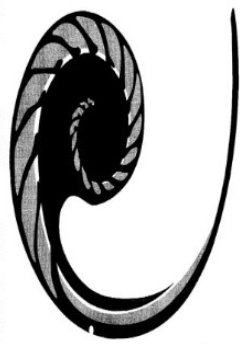 Represented by its parent company The Ergo Baby Carrier, Inc., and its European subsidiary ERGObaby Europe GmbH, Ergobaby has registered several patents for its baby carrier.
--> Patents protect solutions to a particular technical problem. To be eligible for protection, these solutions must meet the relevant criteria of novelty, inventive step and industrial application (e.g., Articles 52 and 53 of the European Patent Convention).
Taking the Ergobaby baby carrier as an example, the technical problem it resolves relates to the provision of ergonomic support, both for the baby and the person carrying it. As can be seen from in the claims and illustrations in its European patent (EP2967231A1), shown to the right, the product combines different support mechanisms for the baby's neck, legs and thighs and numerous possibilities to adapt the carrier to babies of different ages, as well as support for the person carrying the baby.
- Design rights
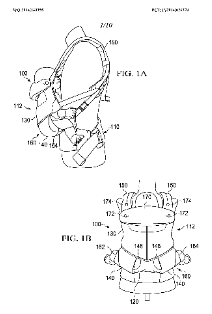 While patent rights protect the technical side of a creation, this only protects part of the innovation. That’s why Ergobaby has also filed design rights to protect the appearance of its baby carrier, too.
--> Design rights protect how a product looks (rather than how it works). To be eligible for protection, designs must meet the relevant criteria of novelty and individual character (under EU design law, for example).
Ergobaby has registered several design rights for its baby carrier, including the European design (pictured, right).
- Trademarks
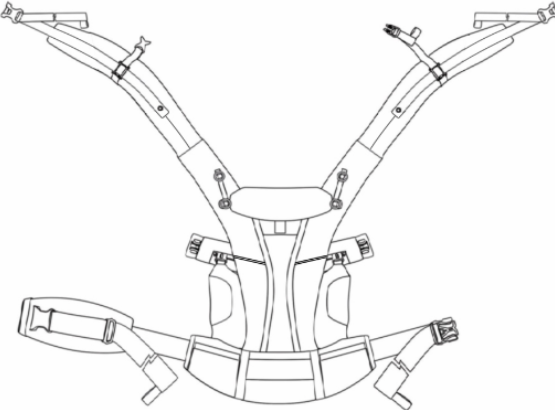 Finally, Ergobaby has registered several trademarks to protect its product and brand.
--> Trademarks are signs whose main function is to distinguish the goods or services of one company from those of other companies. This sign can consist of a word, an image or a combination of both, but it can also be a sound or a smell or other such 'non-traditional’ trademark.
Ergobaby’s trademark registrations include a word mark ‘ERGOBABY’ and a logo (pictured, right).
Why the types of IP right used matters
The distinction between the technical (internal) and non-technical (external and appearance-related) sides of the product, as well as how the product works and how it looks, is of utmost importance because it allows for different forms of IP protection. However, making the distinction between these two elements is not always straightforward, especially as the technical function of a product can play a significant role in how it looks.
A good example of this ‘technical function exception’ (as it is called in EU design law) can be found in the case law surrounding another creation that is popular with children: LEGO.
As we explained in a case law review at the time, the EU Intellectual Property (EUIPO) had concluded in 2019 that all elements relating to the design of the flat LEGO bricks were determined by the technical function of the product and therefore did not qualify for design protection. However, the EU General Court disagreed, ruling that the LEGO bricks could qualify for design protection if at least one of the features is not purely functional. According to the Court, the smooth surface of the top of the toy block was a free choice of the designer and therefore the appearance of the product was not solely determined by its technical function. (To find out more, read our article in full: ‘Under construction: Design protection for LEGO bricks’.)
Don’t overlook the value of copyright
The distinction between the functional and the non-functional is also important for one of the other types of intellectual property: copyright. 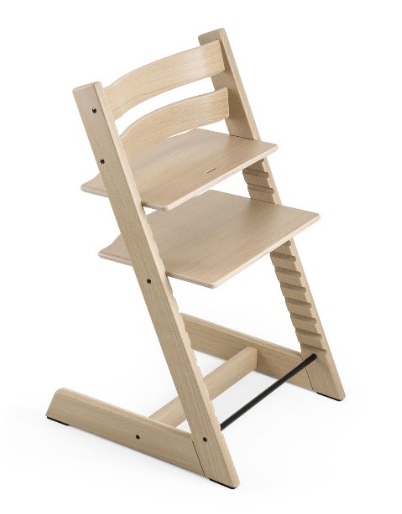
--> Copyright protects works that have an original character and bear the personal stamp of the author. However, as with designs, copyright does not protect those elements of works that are merely functional.
That was the conclusion of the District Court of The Hague in the case concerning the – yet another popular children’s product – the Stokke Tripp Trapp Highchair (pictured, right). In 2011, the District Court of The Hague ruled that the Tripp Trapp Highchair is protected by copyright. However, this scope of protection is limited to the non-functional elements of the chair, such as the italicised L-shape of the uprights and beams.
Finding the appropriate distinction between the different elements of human creation is key to determining which IP right should be used to protect each aspect of a product. To find out more about the different types of intellectual property and how to protect them, watch our webinar ‘Master the basics of IP: Unlock the power of your intellectual property’, speak to your Novagraaf attorney or contact us below.
Volha Parfenchyk works in Novagraaf’s Knowledge Management department. She is based in Amsterdam.